
Overactive Letdown
When you have a strong and/or fast letdown, this is called an overactive letdown reflex. Overactive letdown can cause babies to choke and sputter because the milk suddenly is flowing at a rate faster than they can handle. For most babies, they choke and sputter and happily go right back to breastfeeding. However, for some babies, they are frightened by the strong letdown and may start to refuse the breast.
How to manage overactive letdown, 3 methods:
- When the letdown occurs (baby begins to swallow very quickly or you feel the letdown), unlatch baby and catch the milk in a burp cloth for 30-60 seconds, or until the flow slows. You can then re-latch and resume the feeding.
- You can stimulate the letdown before latching baby by doing some nipple stretching. When the letdown occurs, catch the milk in a burp cloth until the milk flow slows then latch baby and begin the feeding.
- You can change your position to cause the milk to flow against gravity. In the traditional cradle position, gravity is pulling the milk down baby’s throat and it is accelerated by the overactive letdown. If you alter your position slightly, so that baby is more on top of you, the flow will be going upwards, against gravity, slowing the forceful flow down baby’s throat. This can help baby to manage the flow better.
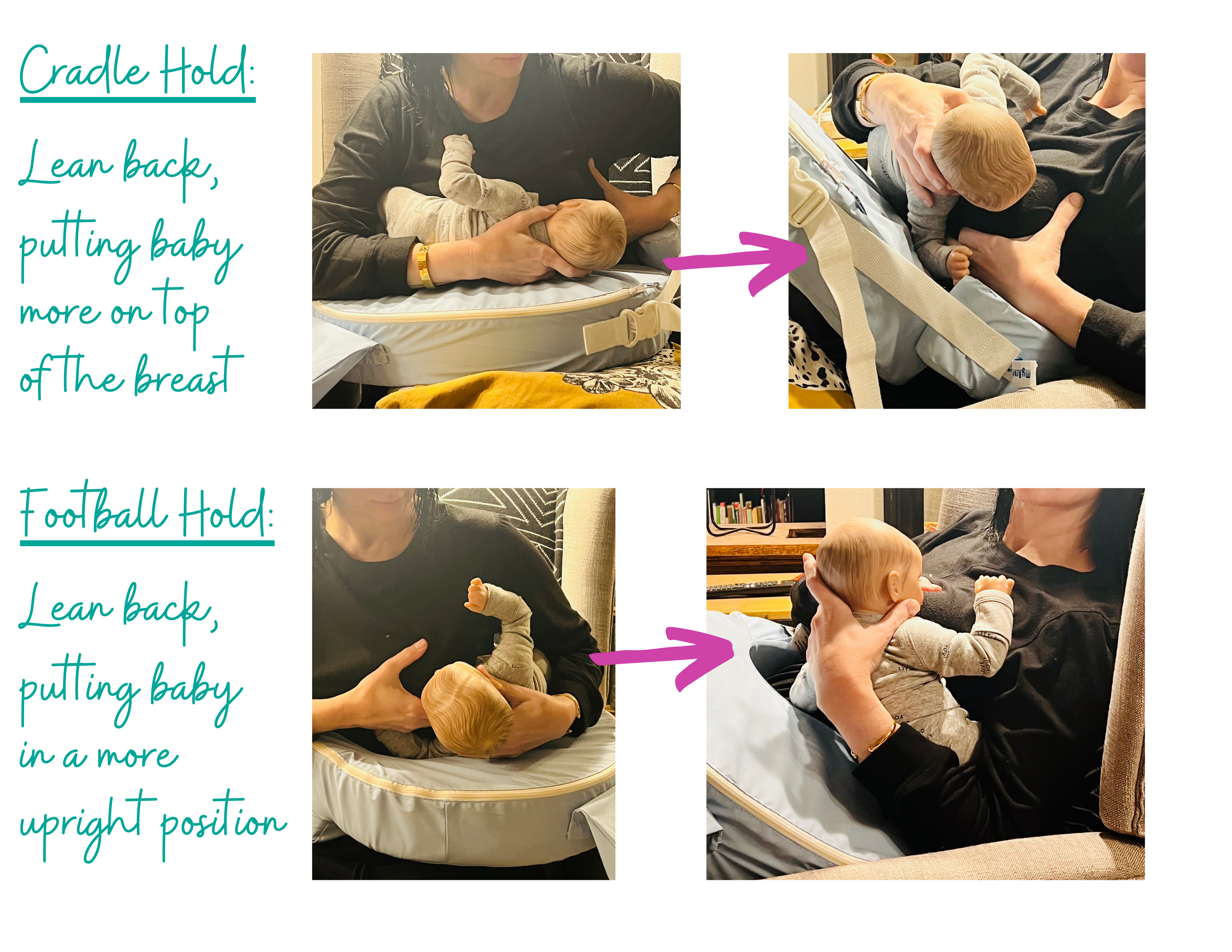
How to solve overactive letdown:
- Overactive letdown tends to go hand-in-hand with oversupply.
- If you’re truly making more than you need, you’ll want to work on reducing the supply some so that you’re making just what you need and not much extra.
- If you’ve been pumping or using the Haakaa to collect milk in addition to breastfeeding your baby, you’re removing more milk than is needed. The first step is to eliminate any extra milk removal.
- I generally do not recommend that moms pump for a few minutes to remove some milk before latching as a way to manage overactive letdown. This method perpetuates the cycle of oversupply and creates more steps for mom without solving the problem.
- If you’re experiencing oversupply but you’re not pumping or removing milk outside of breastfeeding, you may want to try block feeding for a few days to reduce the supply a bit. Block feeding, sticking to one breast for a specified period of time, will cause the milk to build up in the opposite breast. This will send the message to the brain that you’re making too much and will begin to down regulate the supply.
How to block feed:
- For three days:
- Breastfeed only from one breast at each feeding (within a 3 hour window).
- Anytime baby wants to go back to the breast within that period, put #{him} back on the same breast.
- Use breast compression to facilitate flow if he seems fussy.
- Allow the fullness to build up in the unused breast to send the message to the brain to reduce the supply some.
- Use ice to help with any inflammation.
- Follow up with IBCLC to evaluate progress and determine next steps.